Building and history
Palazzo Pesaro: From its Origins to the 19th Century
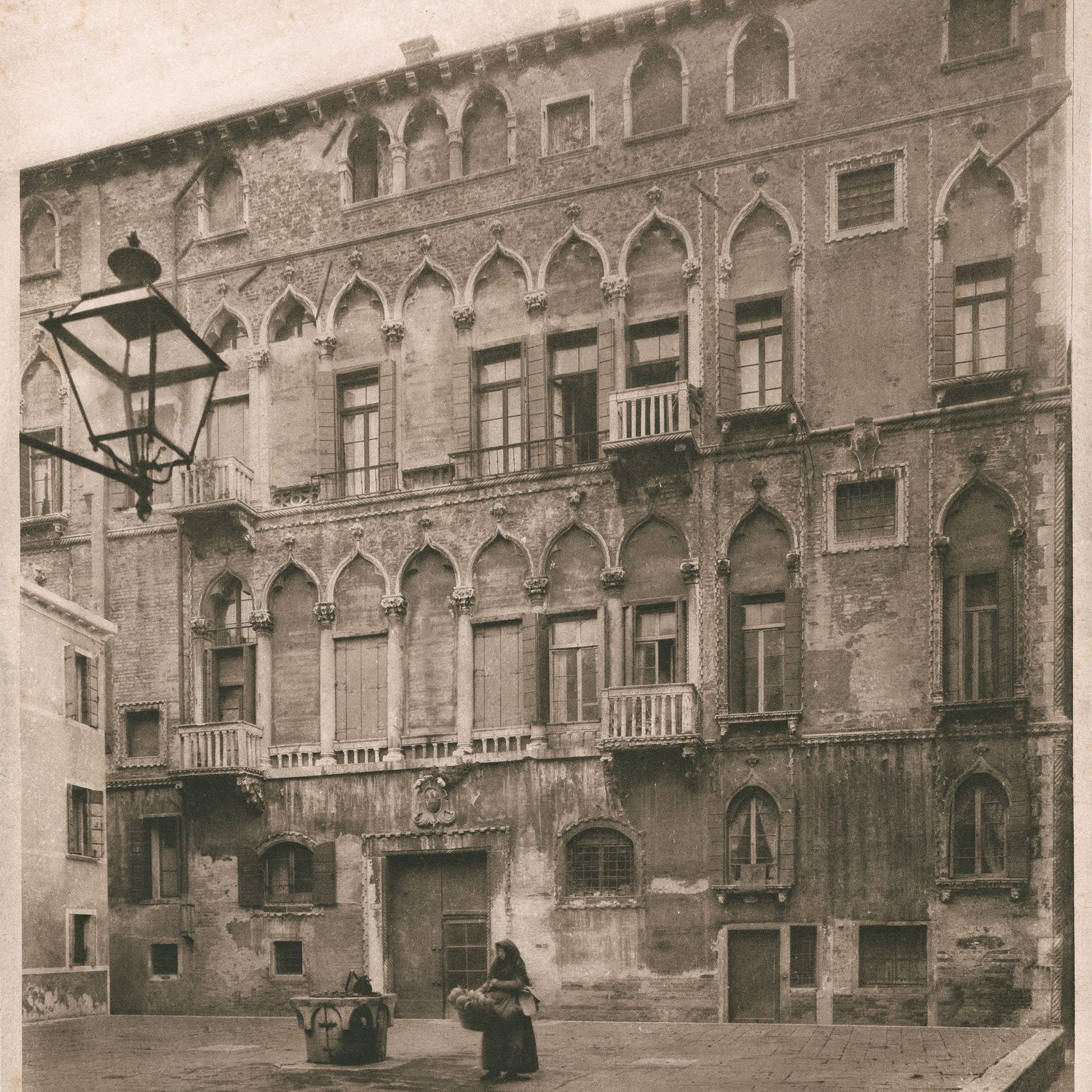
Although the precise date of construction cannot be documented, stylistic study and comparisons with other Venetian palaces suggest the start of construction of Palazzo Pesaro between 1460 and 1480.
Commissioned by the nobleman and naval commander Benedetto Pesaro (1433-1503), the building stands on a site that, since the 12th century, had housed first a religious structure and later a fondaco (a traditional merchant’s house-warehouse). Expanded and modified over the centuries, today it represents the largest private building of the Venetian Late Gothic period. It boasts architectural features of remarkable prestige, such as the four multi-light mullioned windows on the first and second noble floors, and and an unusual depth of the rooms between the two façades on the Rio di Ca’ Michiel to the one on Campo San Beneto, exceeding 43 meters in depth.
When the male line of the Pesaro di San Beneto family died out at the end of the 17th century, the building was leased out starting in 1720. Until 1825, it hosted various cultural entities, including the Albrizzi Printing House, the Accademia degli Orfei, and later the Società Apollinea (prior to its relocation to the Teatro La Fenice).
Towards the mid-19th century, the 1842 Austrian land registry certified the profound fragmentation of the palazzo, with the structure divided into approximately twenty residential units owned by different families.
From Ruin to Art Laboratory: The Era of Mariano and Henriette
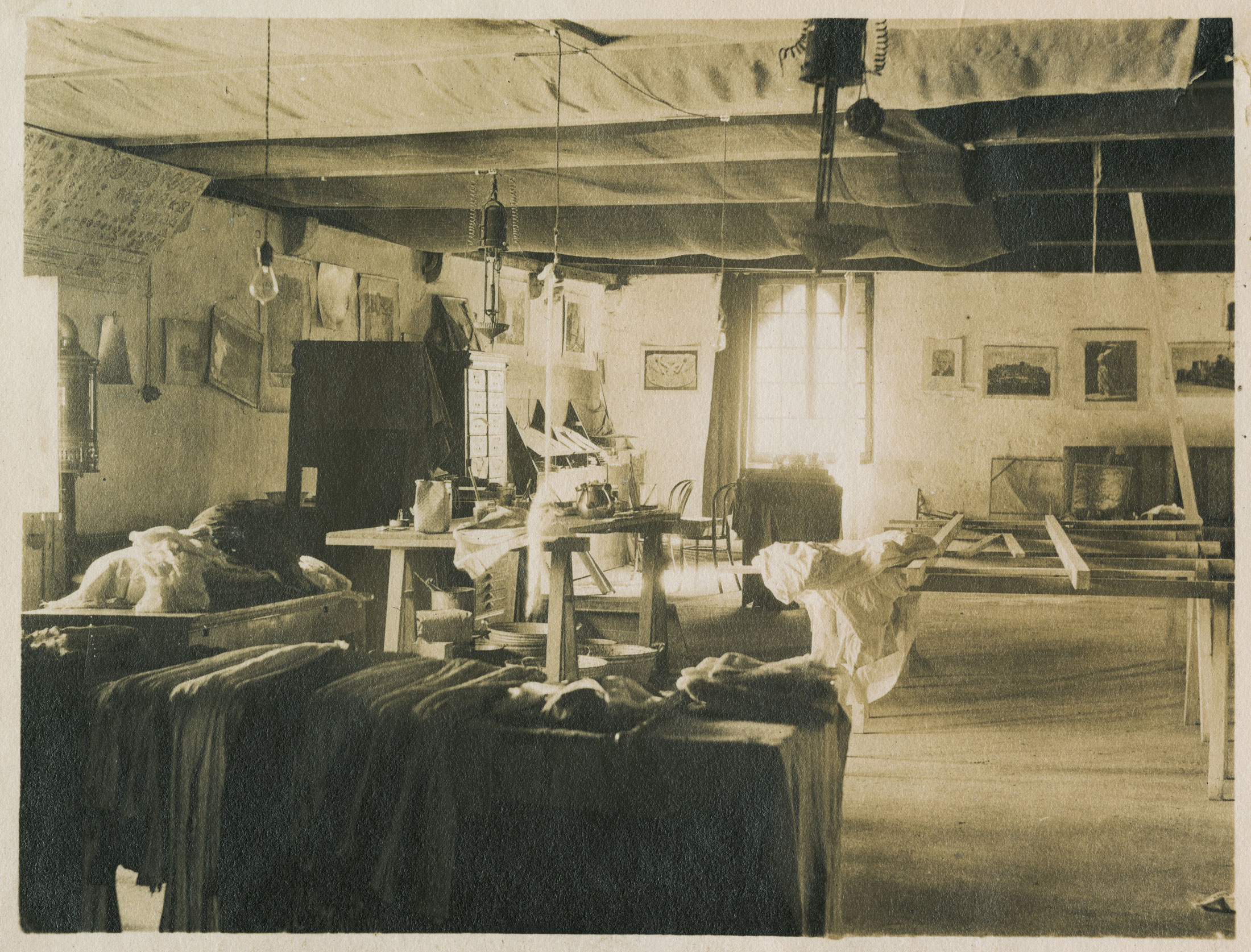
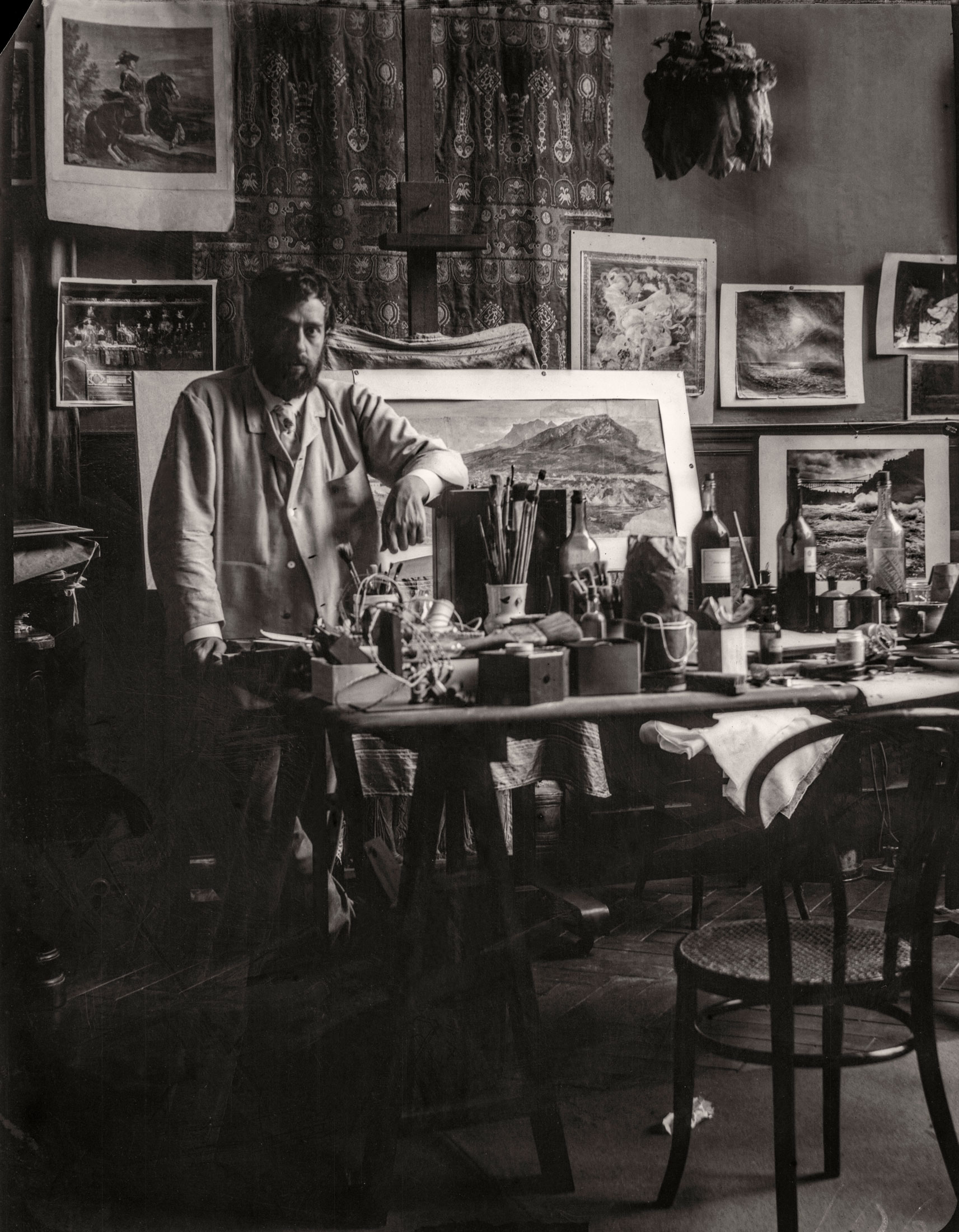
When Mariano Fortuny y Madrazo, attracted by this architectural beauty, entered it for the first time in 1898, occupying the large hall located in the attic and establishing his own studio, it was in a state of decay. Over the years, having acquired the other parts of the building in 1899, 1900 and 1906, Fortuny, patiently but steadily, began the restoration work of the building.
Between the walls of the large hall on the top floor, after a first use dedicated to his artistic and scenographic experiments, Fortuny conceived and built the first plaster model of the famous theatrical device called “Cupola”. He then chose the palace as his home and in 1907 he installed a small textile workshop there together with Henriette Nigrin, known in Paris at the beginning of the twentieth century, inspiring muse and companion of equal artistic sensitivity. After a few years, two entire floors of the building were occupied by the extraordinary atelier for the creation and printing of dresses and silk and velvet fabrics. While Mariano was perfecting his studies and his inventions, his wife Henriette, with exceptional dedication, directed the laboratory.
Between the Winter Garden and the Library: The Souls of the Fortuny Atelier
Palazzo Pesaro degli Orfei soon became a factory. Every morning, when the caretaker opened the door, workers entered the small courtyard and, climbing the open staircase, arranged themselves in the hall of the atelier.
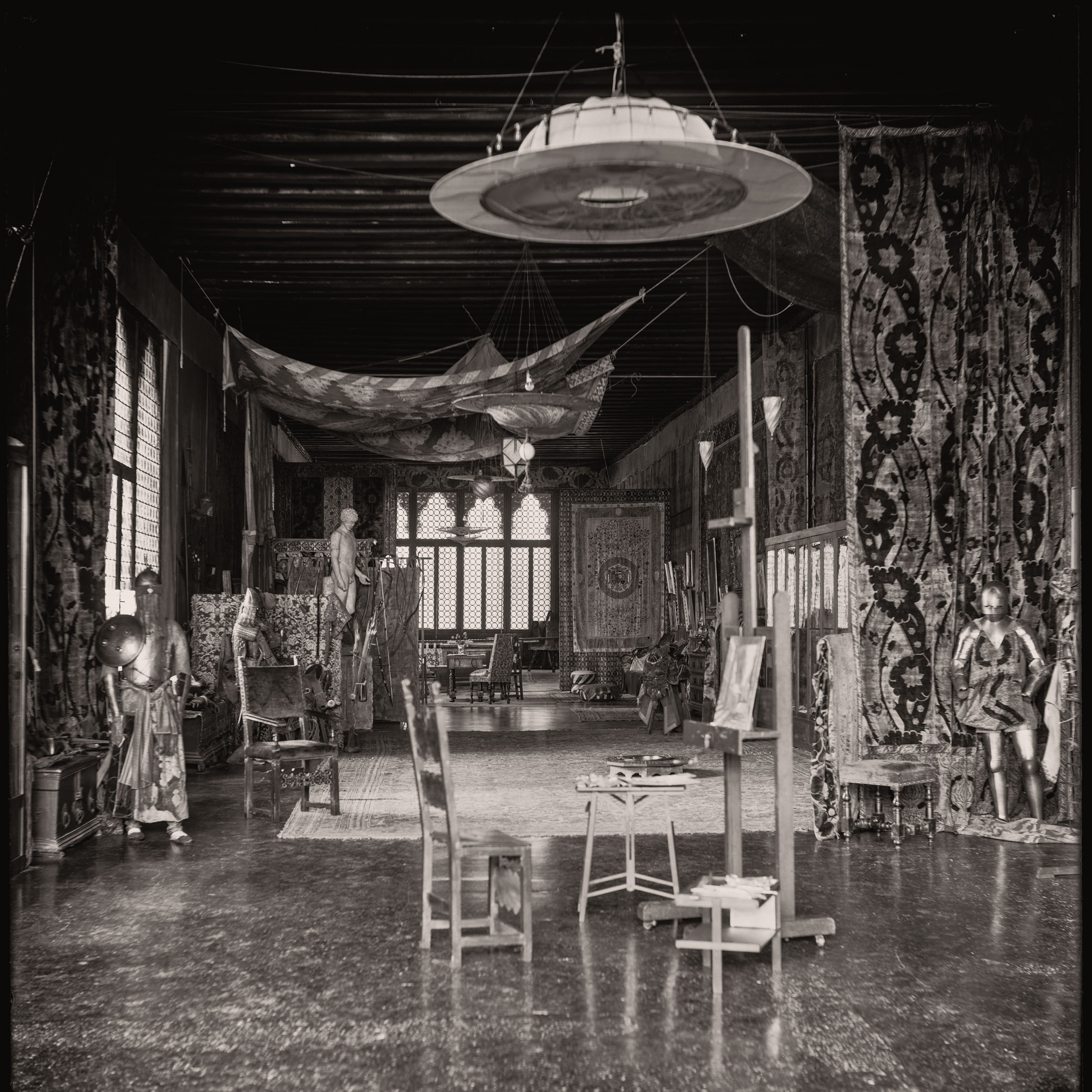
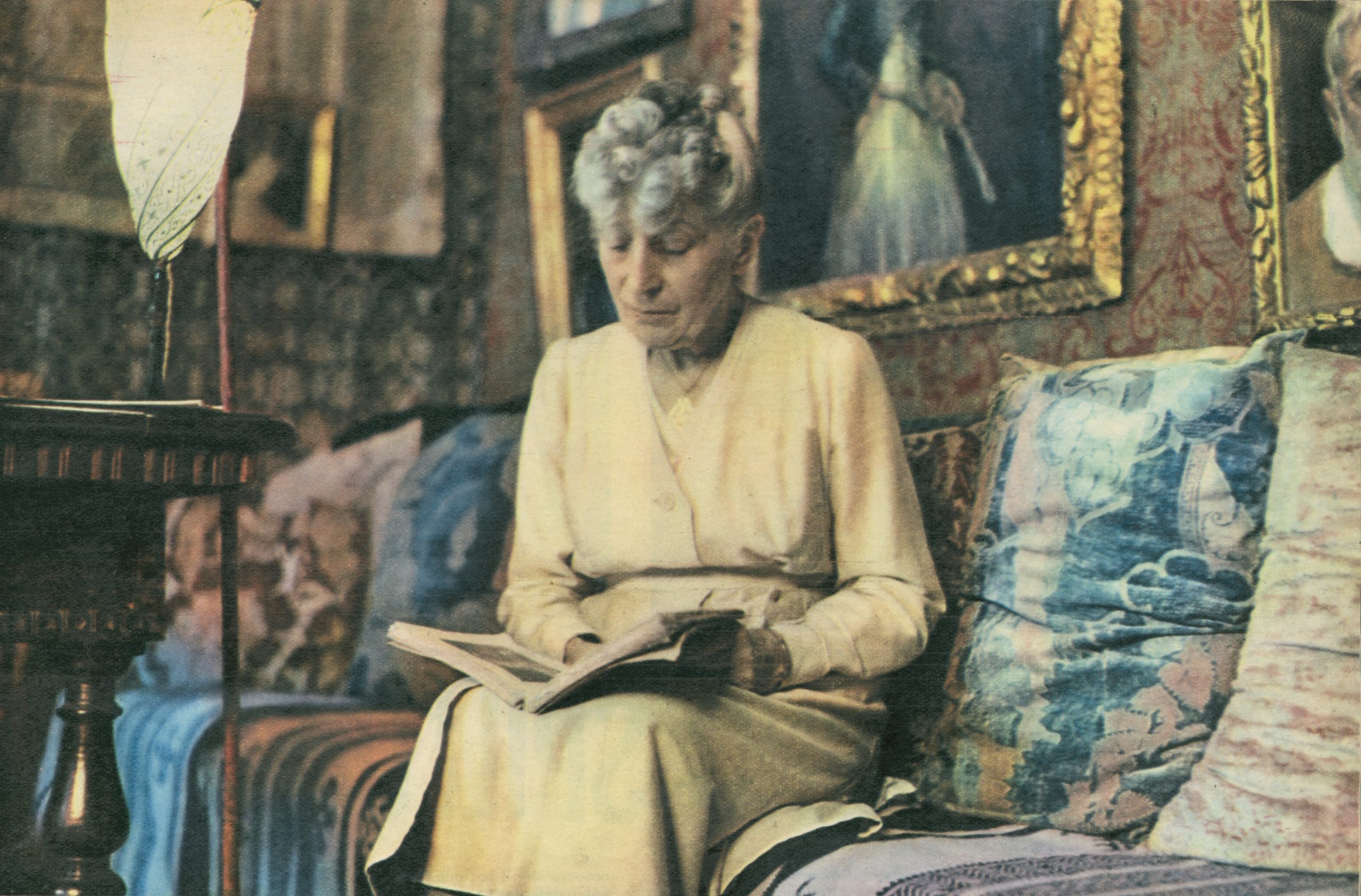
Since 1915 Mariano began the wall decoration of one of the building’s magical places: the winter garden and painting studio located on the first noble floor. An “enchanted garden”, animated by female figures, allegorical images, satyrs and exotic animals, framed in an original architectural context, enveloped in floral and vegetable motifs, garlands and grotesques. On the second floor he accommodated the precious library, full of valuable books, drawing inspiration from the memory of his father’s artist studio and his personal artistic experience. He furnished the first-floor salon recalling the captivating gleams of the Orient, evoking his father’s artist studio while simultaneously exalting his own creative work with his custom-printed fabrics, silk chandeliers, suits of armor, antique carpets, and furniture (now partially dispersed).
From the 1920s onwards Mariano incessantly continued his work dedicating himself to the search for new solutions for theatrical scenes, to the creation of patterns for printed fabrics, to the invention of new styles for clothing, never forgetting his great passion: painting. Those who, enjoying a rare privilege, managed to cross the threshold of those halls could only bring back an ecstatic vision.
The Bequest to the City and the Founding of Museo Fortuny
After Fortuny’s death on May 2, 1949, the building was donated by his wife Henriette to the Municipality of Venice in 1956 to be “used perpetually as a centre of culture in relation to art; the central hall on the first floor will have to preserve the characteristics of what was the favourite studio of Mariano Fortuny y Madrazo, with the works, furniture and objects currently found there; the property must be called Palazzo Pesaro Fortuny”, as expressly indicated in the notarial deed.
The city administration actually took full possession of it in 1965, when Henriette died. Ten years later, in 1975, the Museum finally opened to the public. In 1978 the Venetian administration completed the property by purchasing the Androne on the ground floor, finally granting integrity to the entire complex that has now become a museum.
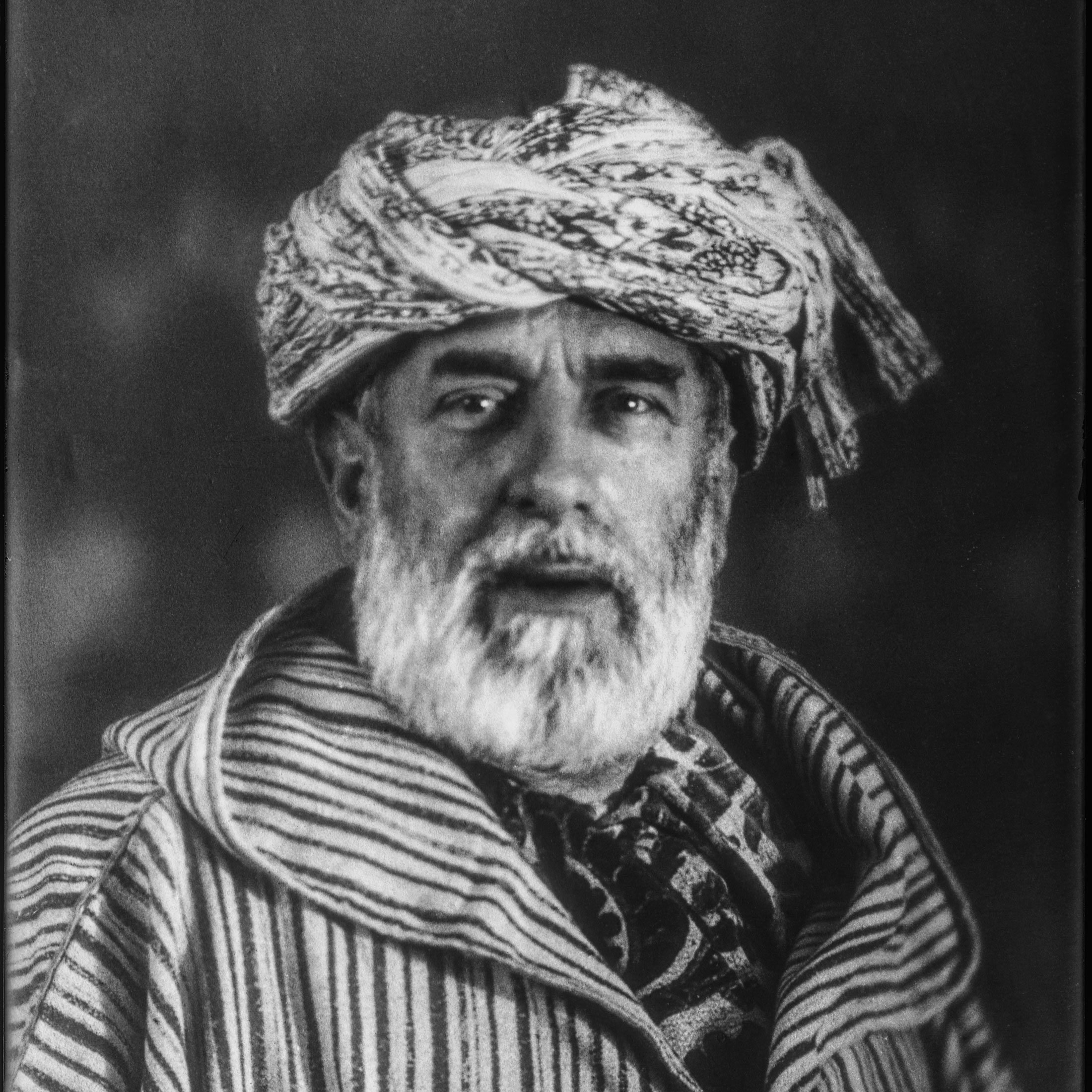
Mariano Fortuny y Madrazo
Born in Granada in 1871, Mariano Fortuny was himself the son of an artist and quickly found a place within the art and social world of Paris, the city in which he completed his studies as a painter.
At 18 he moved to Venice, where he attended international artistic circles and would soon have figures such as Gabriele D’Annunzio, Hugo von Hofmannsthal, Marchesa Casati, Eleonora Duse and Prinz Fritz Hohenlohe-Waldenburg amongst his friends.
A visit to Bayreuth and encounter with Wagnerian Gesamtkunstwerk [total work of art] had a profound effect upon him, and his interest shifted from painting to set design and stage lighting; his goal was to achieve total union of music, drama and visual presentation.
At the beginning of the 20th century he would design sets for the Italian premiere of Tristan and Isolde at the Scala in Milan. Meanwhile, he began to develop his idea for the ‘cupola’ – that is, a system of stage-lighting that would use indirect, diffuse illumination to free set design from the restrictions of traditional lighting. When he began to enjoy the patronage of the Comtesse de Bearn, Fortuny’s revolutionary set designs could be put into full effect: between 1903 and 1906 the countess’s private theatre was equipped with a fully updated ‘cupola’ system.
As a result of the fame this brought, Fortuny’s system was then produced in Berlin by AEG and adopted by major theatres throughout Europe.
But Mariano Fortuny was now searching out new creative stimuli: he began to produce fabrics and printed textiles, in partnership with Henriette Nigrin, who would become his wife in 1924; together they created the plissé silk dress known as the Delphos which made Fortuny famous throughout the world.
Even in these years of intense activity there was no drop in the number of commissions he received for work in set and theatre design.
The 1930s would see Fortuny make other innovations – for example, “Tempera Fortuny”, coloured photographic paper – and work on the illumination of some of the great cycles of paintings to be seen in Venetian scuole (for example, Tintoretto’s work at the San Rocco and Capriccio’s at San Giorgio degli Schiavoni).
Towards the end of the 1930s Mariano Fortuny retired to his magnificent home in the San Beneto district of Venice, where he once more took up painting and began to put together a record of his very varied career.
He died in 1949, and is buried at Verano in Rome alongside his famous father.